


Introduction
Indonesia is a country blessed with abundant natural resources, including coconut and oil palm plants. Both are widely used by the community to meet daily needs and serve as raw materials for various industries.
Beyond their fruit, oil, and trunks, the leaves of coconut and oil palm trees hold significant economic potential—specifically their midribs, known as lidi. Often dismissed as agricultural waste once the leaves are no longer in use,
these midribs can, in fact, be processed into a variety of useful, marketable products.Utilizing these midribs also presents a business opportunity for local communities, particularly in plantation and rural areas.
Defining Coconut and Oil Palm Leaf Midribs
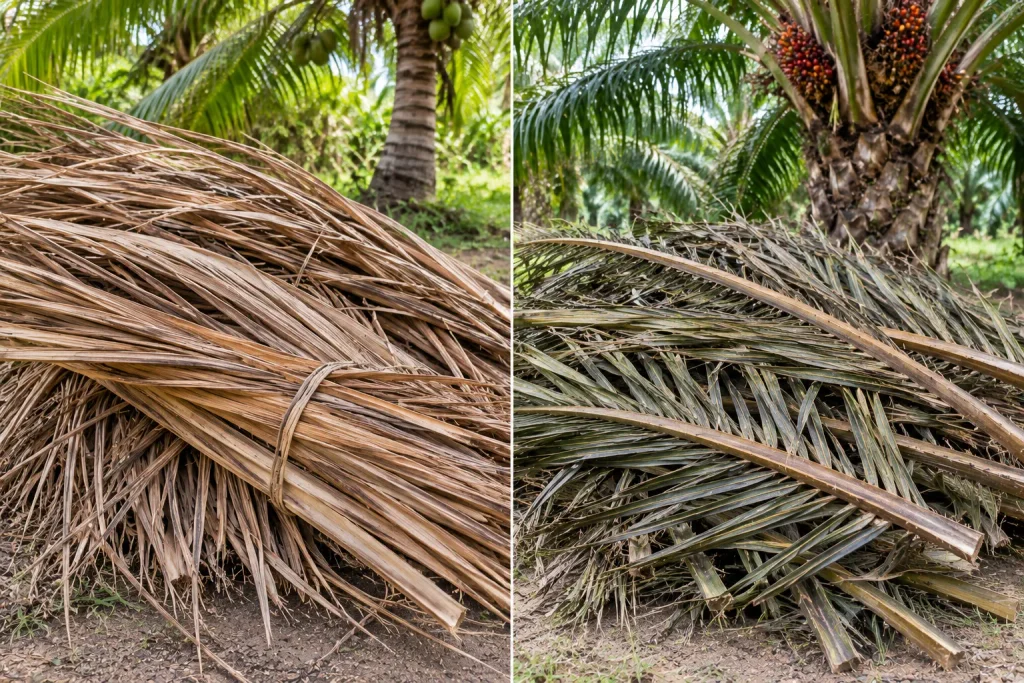
A coconut leaf midrib is the central, structural vein of a coconut leaf; it is long, slender, and quite sturdy. These are typically obtained from mature coconut leaves that are no longer needed for other purposes.
Similarly, oil palm leaf midribs come from the central veins of oil palm leaves. Given the extensive cultivation of oil palm in Indonesia, these midribs are potentially available in large quantities throughout plantation regions.
Both types can serve as raw materials for handicrafts and household items. However, their specific characteristics—such as strength and flexibility can vary depending on the plant species, the age of the leaf, its size, and the processing methods applied.
Uses of Coconut and Oil Palm Leaf Midribs
Coconut and oil palm leaf midribs offer several practical applications, including:
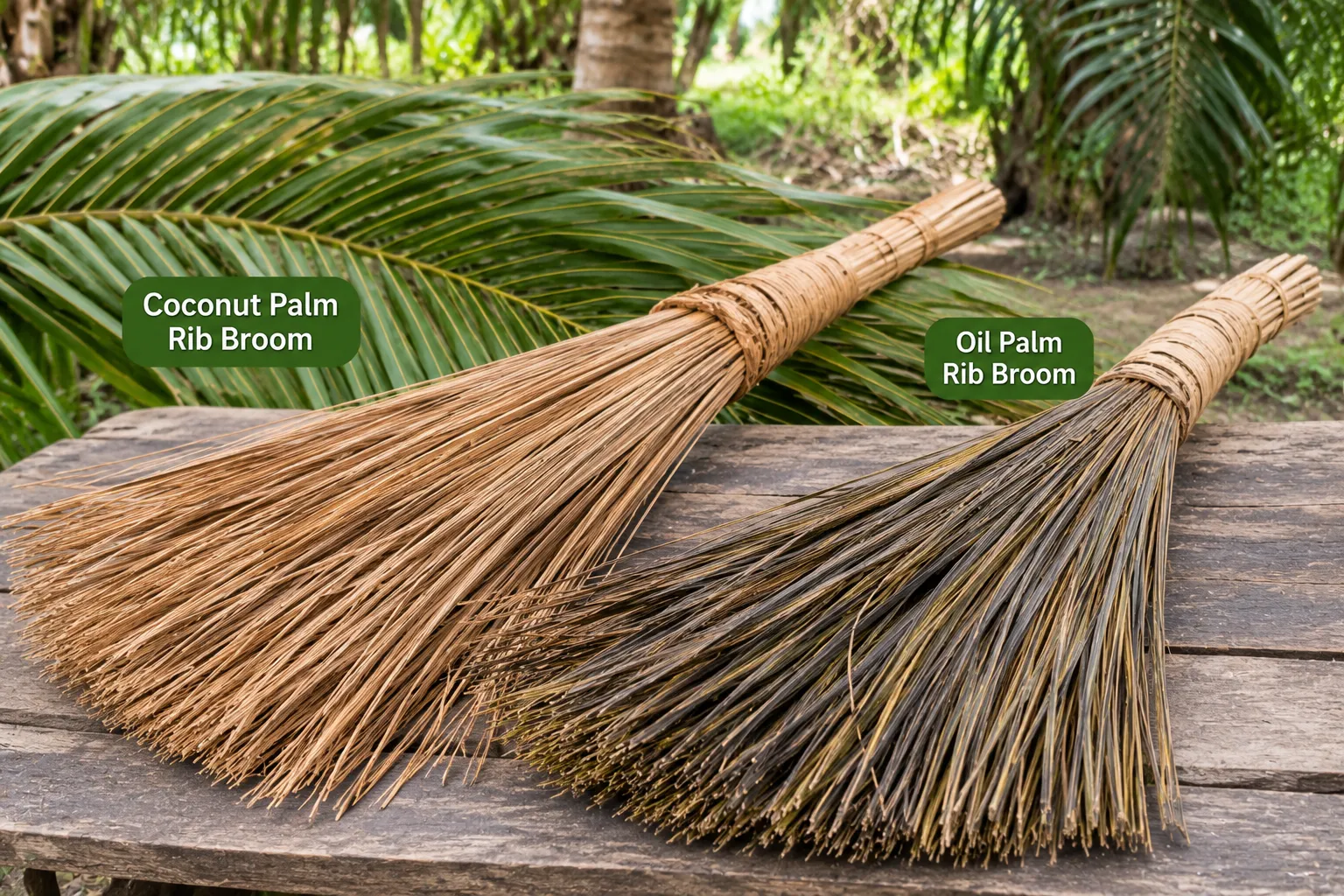
1. Manufacturing brooms: The midribs can be bundled together to create brooms for cleaning yards, gardens, and home environments.
2. Crafting: The midribs can be woven or arranged to create various items, such as fruit bowls, storage containers, wall decorations, and baskets.
3. Material for household products. With proper processing, leaf midribs (*lidi*) can be used to create woven plates, coasters, and versatile containers.
4. Business opportunities for the community. Products made from leaf midribs can be marketed directly or through online sales platforms.
5. Reduction of agricultural waste. Processing leaf midribs helps utilize parts of plants that previously held little economic value.
Processing of Leaf Midribs
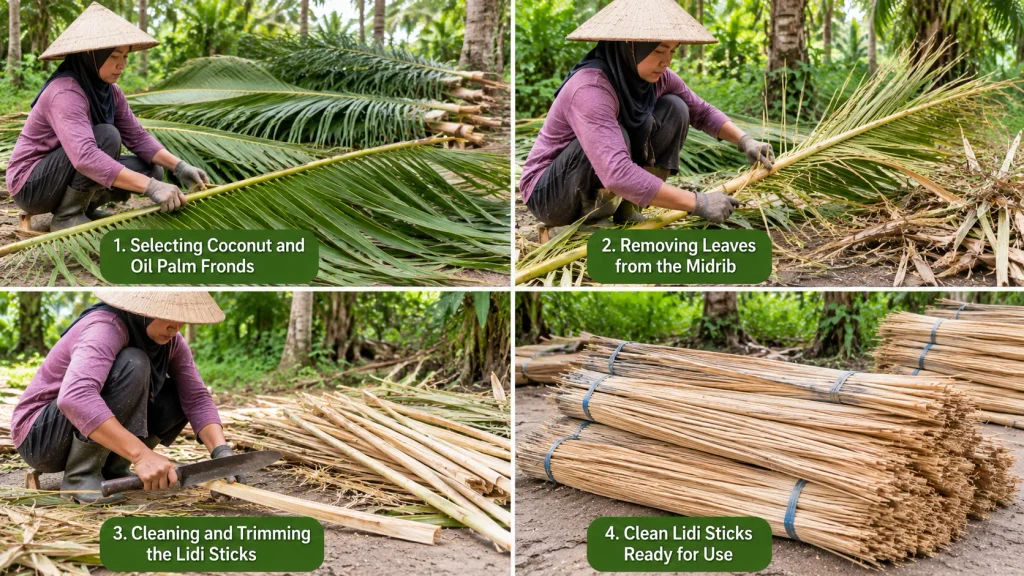
The processing of leaf midribs begins with the collection of suitable coconut or oil palm leaves. Next, the midribs are separated from the rest of the leaf structure. They are then cleaned of any remaining leaf tissue and debris,
followed by a drying process until the moisture content is sufficiently low for further crafting. Once dry, the midribs are sorted based on their size, length, and quality. Straight and sturdy midribs can be used to make brooms,
while those suitable for weaving can be crafted into various items. In the final stage, the products are trimmed and packaged to enhance their appeal and prepare them for the market. Ensuring the cleanliness of the raw material and the precision of the drying process
is crucial for maintaining product quality and minimizing the risk of mold growth during storage.
Economic Opportunities from Palm Leaf Midribs
The processing of palm leaf midribs—from coconut or oil palm trees—offers significant development potential, as the raw material is readily available from plantation activities. Individuals can start small-scale ventures, such as manufacturing brooms or creating simple handicrafts.
The market value of these products can be enhanced through attractive designs, high-quality craftsmanship, the selection of superior materials, and appropriate packaging. Furthermore, marketing via social media and online marketplaces can help expand the consumer base.
Nevertheless, entrepreneurs must carefully consider factors such as the availability of raw materials, production costs, product quality, and market demand.Not every product made from these midribs will automatically yield a profit; therefore, thorough business planning and cost analysis remain essential.
Environmental Impact
Utilizing coconut and oil palm leaf midribs supports efforts to reduce organic waste from plantations. By transforming available materials into useful products, communities can increase the value derived from natural resources.
Such processing must be carried out responsibly. The collection of raw materials should not hinder plant growth, and any processing waste that cannot be repurposed must be managed appropriately.
Thus, the utilization of these midribs not only offers potential economic benefits but also promotes more efficient resource use.
Conclusion
Coconut and oil palm leaf midribs are materials with the potential to be developed into products of economic value. Beyond their traditional use in making brooms, these midribs can be crafted into a variety of artisanal goods and household items.
Through proper processing, creativity, and sound marketing strategies, these materials can serve as a viable business opportunity while simultaneously helping to reduce agricultural waste.Consequently, the utilization of coconut and oil palm leaf midribs should be further developed to provide ongoing benefits for both society and the environment.