





Introduction
Indonesia is renowned for its wealth of traditional culinary offerings, each characterized by a distinct flavor profile. Many traditional dishes have emerged from the local practice of utilizing natural resources found in the surrounding environment.
One such traditional food ingredient, which remains widely used today, is terasi (fermented shrimp or fish paste).This seasoning is known for its pungent aroma and savory, umami-rich taste, making it an essential component in a variety of Indonesian dishes.
Terasi is more than just a kitchen condiment; it is an integral part of Indonesia’s culinary heritage.Its existence reflects the ingenuity of coastal communities in transforming marine harvests into food products that can be preserved and stored for later use.
History and Origins of Terasi
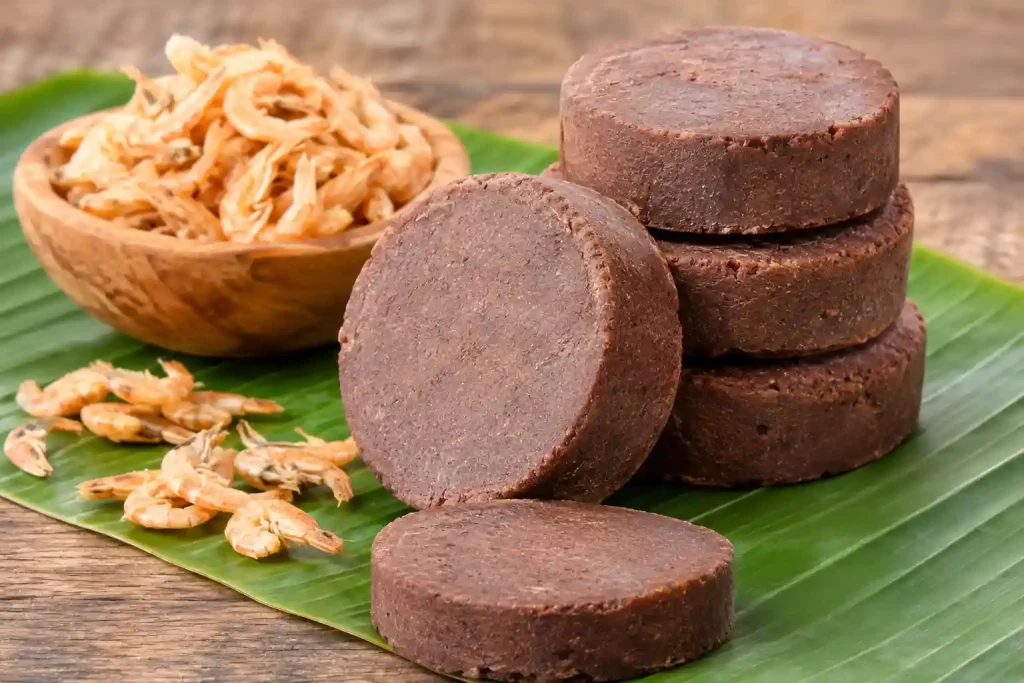
Terasi is a processed marine product, typically made from rebon (tiny shrimp) or small fish that have been fermented with the addition of salt. This production method has long been practiced by coastal communities in Indonesia, particularly in regions with abundant fisheries.
In the past, coastal inhabitants processed their marine catch into *terasi* as a means of food preservation.Through a process involving salting, sun-drying, and fermentation, the raw ingredients undergo a transformation in aroma, texture, and flavor.
The result is a traditional seasoning used to enhance the taste of various dishes.Over time, *terasi* has become a culinary hallmark of several regions, including Cirebon, Indramayu, Sidoarjo, and various other coastal areas.
Each region produces a unique version of *terasi*, shaped by the specific raw materials used, local processing techniques, and regional customs.
The Traditional Production Process of Terasi
Crafting traditional *terasi* requires precision and skill. While techniques may vary, the general production process typically involves the following stages:
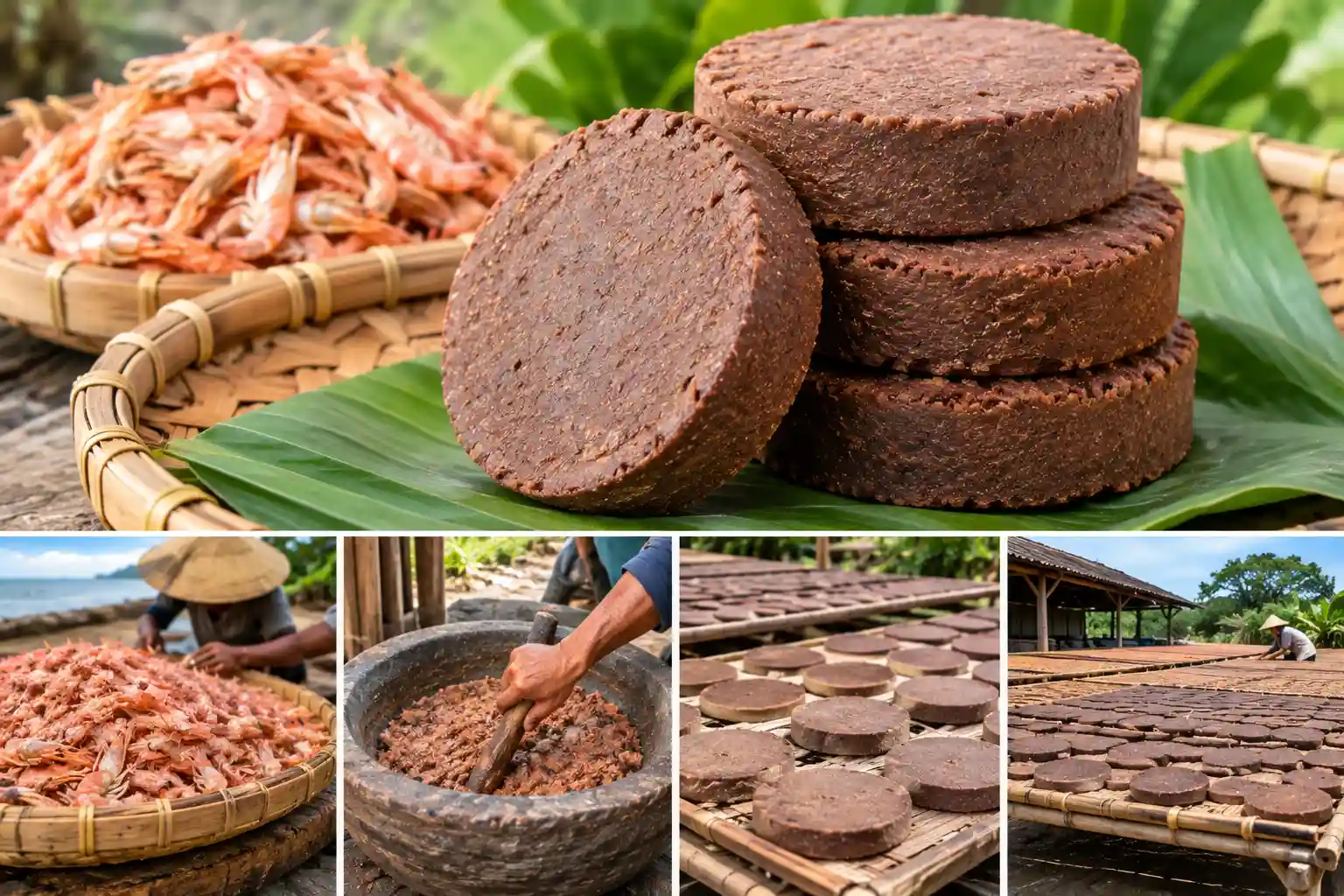
1. Selection of raw materials. *Rebon* (tiny shrimp) or small fish are selected based on their quality and freshness.
2. Washing and salting. The raw materials are cleaned and then mixed with a specific, measured amount of salt.
3. Sun-drying. The ingredients are sun-dried to reduce their moisture content, making them easier to process.
4. Grinding and fermentation. The ingredients are crushed or ground, then fermented to develop the characteristic aroma and flavor of *terasi* (shrimp paste).
5. Shaping and packaging. Once the desired characteristics are achieved, the *terasi* is shaped into blocks or other forms, then packaged to protect it from contamination.
The duration of fermentation and the processing methods may vary according to local traditions. In modern production, the cleanliness of the ingredients, process control, and food safety must be carefully managed to ensure the *terasi* is fit for consumption.
Terasi (Shrimp Paste) in Traditional Indonesian Cuisine
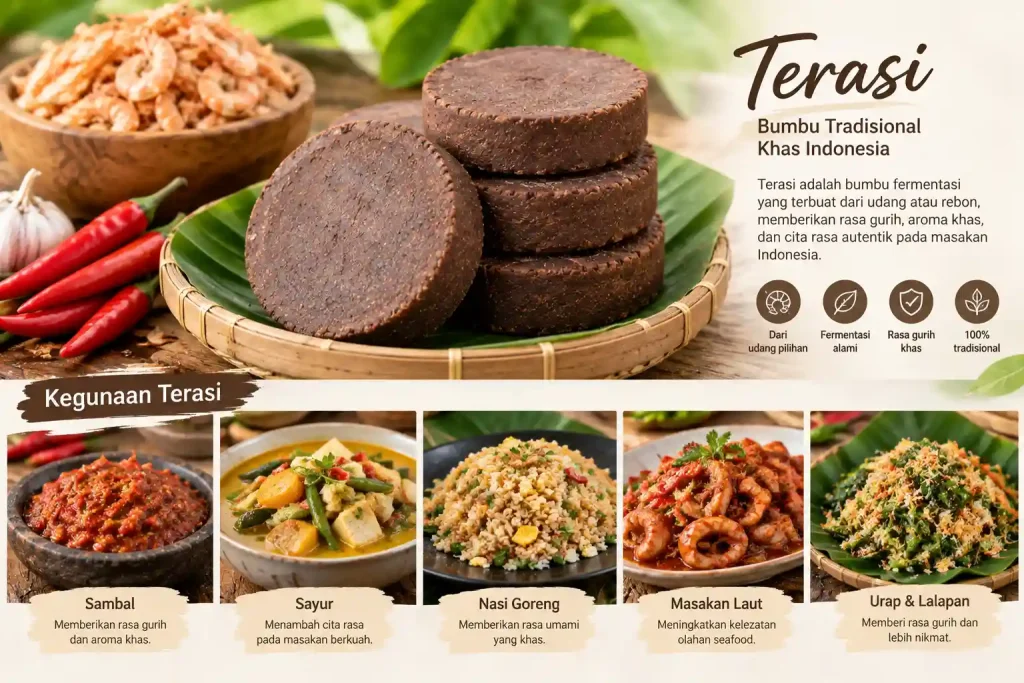
Terasi plays an essential role in a wide variety of traditional Indonesian dishes. Its savory flavor and distinctive aroma make it a popular natural seasoning. One of the most well-known preparations is *sambal terasi* (shrimp paste chili sauce),
made from chili peppers, shallots, garlic, tomatoes, salt, and *terasi*—which is typically toasted or fried beforehand. This combination creates a flavor profile that is spicy, savory, and—depending on the specific recipe—slightly sweet or sour. Beyond *sambal*, *terasi* is used in many other dishes, including:
• Nasi goreng terasi (shrimp paste fried rice), where *terasi* is added to enhance the aroma and depth of flavor.
• Karedok and various *lalapan* (fresh vegetable platters) served with *sambal terasi*, combining crisp, fresh vegetables with a savory, flavorful sauce.
• Tumis kangkung terasi (stir-fried water spinach with shrimp paste), a vegetable dish that utilizes *terasi* to boost its taste.
• Pecel and various regional *sambals*, which, in certain recipe variations, incorporate *terasi* to enrich the flavor.
The use of *terasi* demonstrates how a single traditional ingredient can give rise to a diverse array of dishes, shaped by the creativity and customs of local communities across different regions.
Cultural and Economic Value of Terasi
Terasi holds cultural significance due to its deep connection to the lives of coastal communities. The skill of processing marine products into *terasi* has been passed down through generations. The production process itself reflects the community’s
relationship with the marine environment and their efforts to make optimal use of their catch.Economically, the production of *terasi* serves as a source of income for fishers, seafood processors, and micro, small, and medium-sized enterprises (MSMEs).
When processed effectively, *terasi* can be marketed in both traditional forms and modern packaging, allowing it to reach a broader consumer base.Advancements in processing technology and digital marketing
have also opened up opportunities to introduce *terasi* to younger generations and consumers from outside the local regions. By maintaining the quality and authenticity of its flavor, traditional *terasi* (fermented shrimp paste) has the potential to become a premier local culinary product.
Challenges in Preserving Traditional Terasi
Although still widely used, traditional *terasi* faces several challenges. Shifts in consumption patterns, competition from modern seasoning products, and a lack of knowledge among the younger generation regarding its production
process could threaten the sustainability of this tradition.Furthermore, the processing of *terasi* requires careful attention to sanitation, the quality of raw materials, salt content, and packaging. Producers must also adhere to prevailing food
safety regulations so that this traditional product can compete in a broader market. Preserving *terasi* can be achieved through culinary education, the development of local businesses, the promotion of regional products, and the introduction of traditional recipes to the younger generation.
In this way, *terasi* is not only preserved as a cooking ingredient but also as an integral part of Indonesia’s cultural identity.
Conclusion
Terasi is a traditional Indonesian culinary staple characterized by its distinct flavor, long history, and significant cultural value. Produced through salting and fermentation, *terasi* serves as a seasoning that enriches a wide variety of dishes—from *sambal* (chili sauce) to various home-cooked meals.
Beyond adding a unique flavor profile to food, *terasi* also supports the economies of coastal communities and local entrepreneurs. Therefore, the preservation of traditional *terasi* must be pursued by improving production quality,
fostering marketing innovation, and passing this culinary heritage on to the next generation.By upholding tradition while adapting to the times, *terasi* can continue to be a source of pride within the rich culinary landscape of the Indonesian archipelago.